
A valve box protects a buried water main valve and gives crews surface access to operate it. DomCast Metals supplies the three common Canadian configurations — 4 1/4" slide, 5 1/4" screw, and 5 1/4" slide — with bases, tops, extensions, and lids.
Sizing is matched to your valve depth and municipal standard at quote time. Canadian-owned and serving the waterworks market for 80+ years.
Browse the catalog
Products
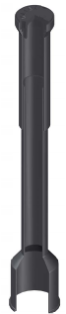
4 1/4" Slide Valve Box Lid
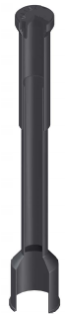
4 1/4" Slide Valve Box 12" Extension
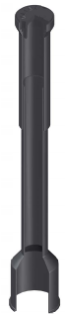
4 1/4" Slide Valve Box 18" Extension
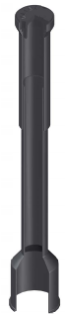
4 1/4" Slide Valve Box 24" Extension
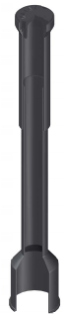
4 1/4" Slide Valve Box Upper
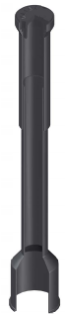
4 1/4" Slide Valve Box 53" Lower
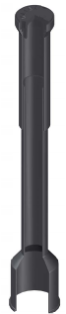
4 1/4" Slide Valve Box 60" Lower
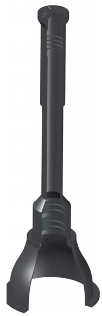
5 1/4" Screw Valve Box #2 Base
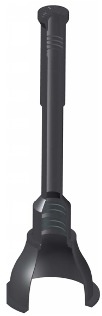
5 1/4" Screw/Slide Valve Box Lid (Blue)
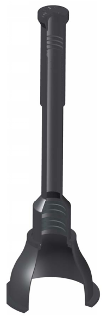
5 1/4" Screw Valve Box #6 Base
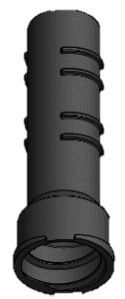
5 1/4" Screw Valve Box 12" Extension
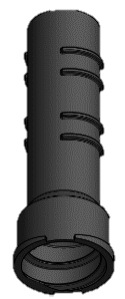
5 1/4" Screw Valve Box 18" Extension
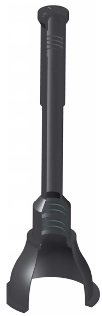
5 1/4" Screw Valve Box Upper
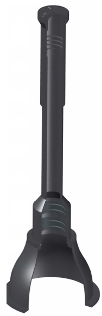
5 1/4" Screw Valve Box 30" Lower
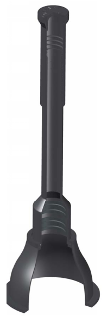
5 1/4" Screw Valve Box 34" Lower

5 1/4" Screw/Slide Valve Box Lid (Black)

5 1/4" Slide Valve Box Upper

5 1/4" Slide Valve Box 53" Lower

5 1/4" Slide Valve Box 60" Lower
Anatomy of a valve box
A water valve box is a stack of cast iron sections, not a single casting. Each piece has one job, and you order them by piece so the assembled height matches the bury depth of the valve. From the valve up:
- Base (lower section). Sits on the bedding around the valve with the bell opening over the bonnet. Its job is to centre the box on the valve operating nut so the key drops straight onto it. Screw type bases are sold by base number (#2, #6), the pattern your standard drawing calls out. Slide type lowers are named by length (53", 60").
- Upper section (top). Carries the lid seat and the flange that bears on the road base. The flange spreads traffic load so the box does not settle, and it resists frost pushing the box up above the pavement.
- Valve box extension. A plain length of shaft, 12", 18", or 24" in our catalog, that goes between the lower and upper sections when the valve is deeper than a two-piece box can reach. Extensions also fix boxes that ended up short after a road was raised.
- Valve box lid. Drops into the recessed seat in the upper section so it sits below the plow line. Our 5 1/4" lids come blue or black and fit both screw and slide uppers.
The operating nut is the reason any of this exists. A gate valve on a water main is buried with the pipe, and the only way to open or close it is an operating key lowered through the box from the surface. That is why inside diameter and plumb matter more than anything else about a valve box. If the shaft is off centre or kinked, the key will not seat on the nut.
Screw type vs slide type
Both types do the same thing. They differ in how the upper section is held at the right height.
| Screw type | Slide type | |
|---|---|---|
| Adjustment method | Upper section threads onto the lower section. Turn it to raise or lower the lid. | Upper section telescopes over the lower section and is set by hand at the depth needed. |
| Depth flexibility | Adjusts within the thread length. Beyond that you add a screw extension. | Adjusts across the full overlap of the two sections. Add a slide extension for deeper valves. |
| Fine tuning after backfill | Can be screwed up or down a small amount without excavating. | Needs the fill around the upper section loosened to move it. |
| Fit between sections | Threads must be clean and matched. Sections are not interchangeable with slide parts. | No threads to cross. Simpler to assemble in a wet trench. |
| Typical use | Municipalities whose standard drawing calls for a #6 base and threaded top. | Municipalities standardised on 4 1/4" or 5 1/4" two-piece telescoping boxes. |
| DomCast catalog | 5 1/4" screw: #2 and #6 bases, upper, 30" and 34" lowers, 12" and 18" extensions. | 4 1/4" slide and 5 1/4" slide: upper, 53" and 60" lowers, 12", 18", 24" extensions (4 1/4"). |
Neither type is better on its own. The one you buy is the one your municipality has standardised on, because crews carry keys and spare parts for that type and their standard drawings are drawn around it.
4 1/4 inch vs 5 1/4 inch
The size in a valve box name is the nominal inside diameter of the shaft, not the outside of the casting or the lid. A supplier spec sheet for slide type boxes reads "a minimum inside shaft diameter of 5 1/4"", and extensions are sold by the same inside dimension. That bore is what the operating key passes through.
Our screw type line is 5 1/4" only. Slide type comes in both sizes. 4 1/4" slide boxes serve municipalities whose standard and existing boxes are that size, since replacement parts have to match what is already in the ground. The two sizes do not mix. A 4 1/4" upper will not fit a 5 1/4" lower, and the lids are different castings, so check the size stamped on the existing box before ordering replacement parts for a repair.
Valve box vs curb box
A valve box goes over a gate valve on the main. A curb box (service box) goes over the curb stop on the service line to a single property, at the point where responsibility changes from the utility to the owner. Crews use both to shut water off from the surface, but the parts are different and are not interchangeable.
A curb stop is a small valve with a tee head. There is no room to drop a large key on it, so a curb box uses a stationary rod pinned to the tee head. The rod stays inside the box and its top is shaped to centre itself in the upper section, so the crew's key only has to reach the top of the rod. The base of the box covers the curb stop without being fastened to it, and a smaller diameter upper section telescopes inside the base.
The service side of our catalog covers the whole assembly:
- Small boot service boxes, #7, #8, #9, plus a large base adapter boot and a replacement boot with retainer clip
- Stainless steel service box rods in 24", 36", 42", 48", and 60" lengths
- Telescopic service box extensions, 6" through 24", for services that ended up short of grade
- Replacement lids, threaded or held with set screws
- A 60" service box key, a valve extension top nut and socket, and a 1" x 4" repair coupling with set screws
Rod length is tied to box length. One supplier's catalog specifies that rods furnished with a curb box run 18" shorter than the box at full extension, so give us the bury depth and we will match the rod to the box.
Setting valve boxes to grade
The lid needs to finish flush with the pavement or boulevard, and the shaft needs to stay plumb over the operating nut. Everything about the install works back from those two conditions.
- Set the base centred on the operating nut. Bed and compact around it so the base does not shift when the trench is backfilled.
- Choose lower and extension lengths so the upper section lands in the middle of its adjustment range, not at the top or bottom of it. One curb box supplier recommends a box six inches longer than the bury so grade can move either way. The same logic applies to valve boxes.
- Backfill in lifts around the shaft and keep it plumb as you go. A box that leans will still take a lid but will not take a key.
- Set the upper section to final grade last, after the road base is in. On screw type boxes this is a turn of the top. On slide type boxes it means holding the top at grade while the last lift goes in.
- For future road work, an extension is cheaper than a new box. The 12", 18", and 24" valve box extensions are meant for exactly this.
Your municipal standard drawing controls the details: bedding, whether a guide plate or grommet is required, and the finished elevation relative to the curb. Send us the drawing number with your order and we will supply to it.
Tell us the valve size, bury depth to the operating nut, and your municipal standard, and we will quote the complete gate valve box as a set: base or lower, any extension, upper, and lid.
Frequently asked questions
What is a valve box on a water main?
A valve box is a vertical cast iron assembly — base, top section, and lid — set over a buried water main valve. It keeps soil off the valve and lets crews reach the valve nut from the surface with an operating key.
What is the difference between slide-type and screw-type valve boxes?
Slide-type sections telescope freely to the needed depth; screw-type sections thread together and adjust by turning. Which type and diameter (4 1/4" or 5 1/4") to use is set by your municipal standard.
What does 5 1/4" mean on a valve box?
It is the nominal inside diameter of the box shaft, the bore the operating key passes through. It is not the outside diameter of the casting or the lid size. 4 1/4" boxes work the same way with a smaller bore, and parts from the two sizes do not interchange.
What is a valve box extension for?
An extension is a plain length of shaft that fits between the lower and upper sections when the valve is deeper than a two-piece box reaches, or when a road has been raised and an existing box ended up short. DomCast stocks 12", 18", and 24" extensions for 4 1/4" slide, and 12" and 18" for 5 1/4" screw.
Do 4 1/4" and 5 1/4" valve box parts interchange?
No. Uppers, lowers, extensions, and lids are different castings for each size. Check the size of the existing box before ordering repair parts. The 5 1/4" blue and black lids do fit both screw and slide uppers of that size.
What is the difference between a valve box and a curb box?
A valve box sits over a gate valve on the water main. A curb box, also called a service box, sits over the curb stop on a single property's service line, at the point where utility responsibility ends and the owner's begins. A curb box uses a stationary rod pinned to the curb stop and a smaller telescoping upper section, and its parts are not interchangeable with valve box parts.
Can I get the whole valve box assembly quoted as one item?
Yes. Send the valve size, bury depth to the operating nut, and your municipal standard drawing number, and DomCast will quote the base or lower, any extension, upper, and lid as a matched set.