
Catch basins collect storm runoff at the curb and street level; the cast iron frame and grate on top take the traffic load and pass water into the basin. DomCast Metals supplies dished, flat, V-type, and bicycle-proof catch basin frames and covers, plus curb inlet patterns, for municipal storm drainage.
Patterns for concrete, corrugated steel, and HDPE structures are available. Canadian-owned and serving the waterworks market for 80+ years.
Browse the catalog
Products
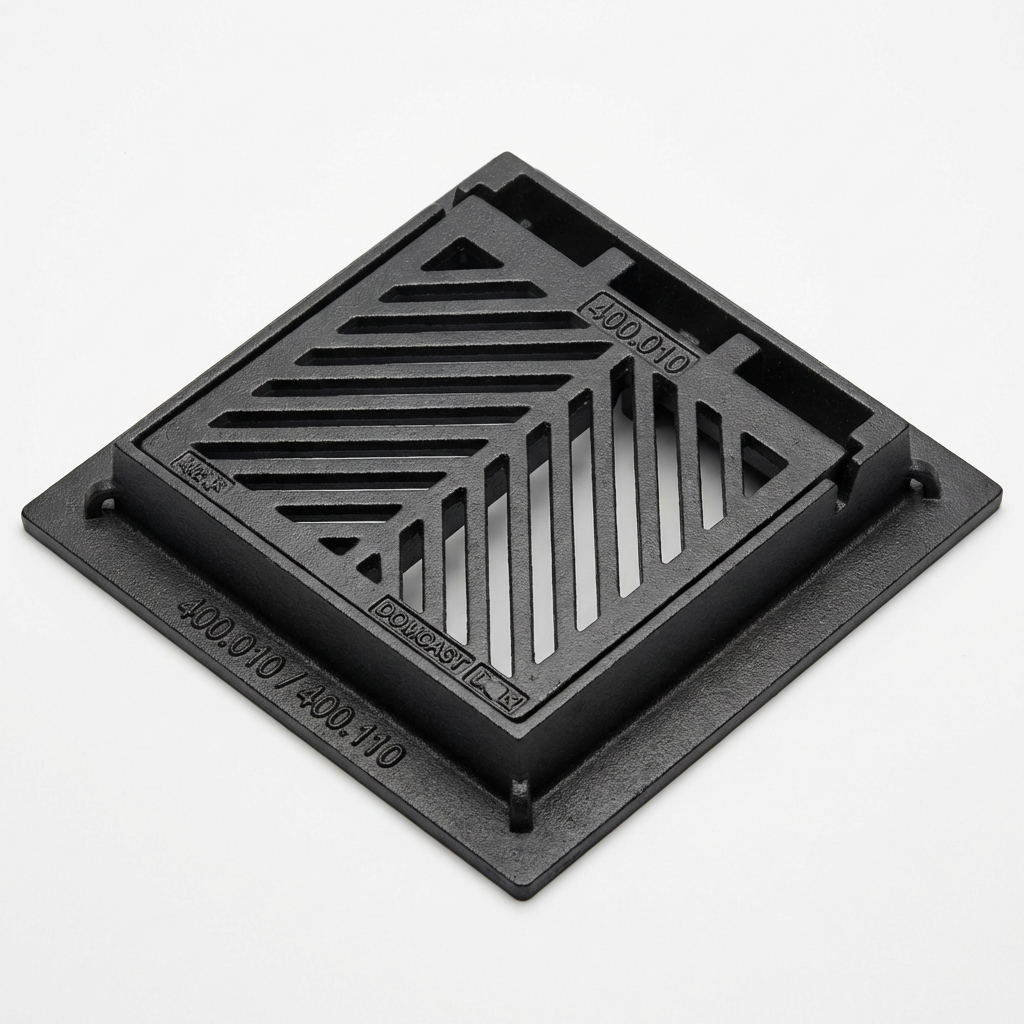
Dished Overflow Catchbasin
Thunder Bay Dished Catchbasin Cover / Frame Cut off Corners
Low Profile Thunder Bay Dished Overflow Catchbasin / Frame Cut off Corners
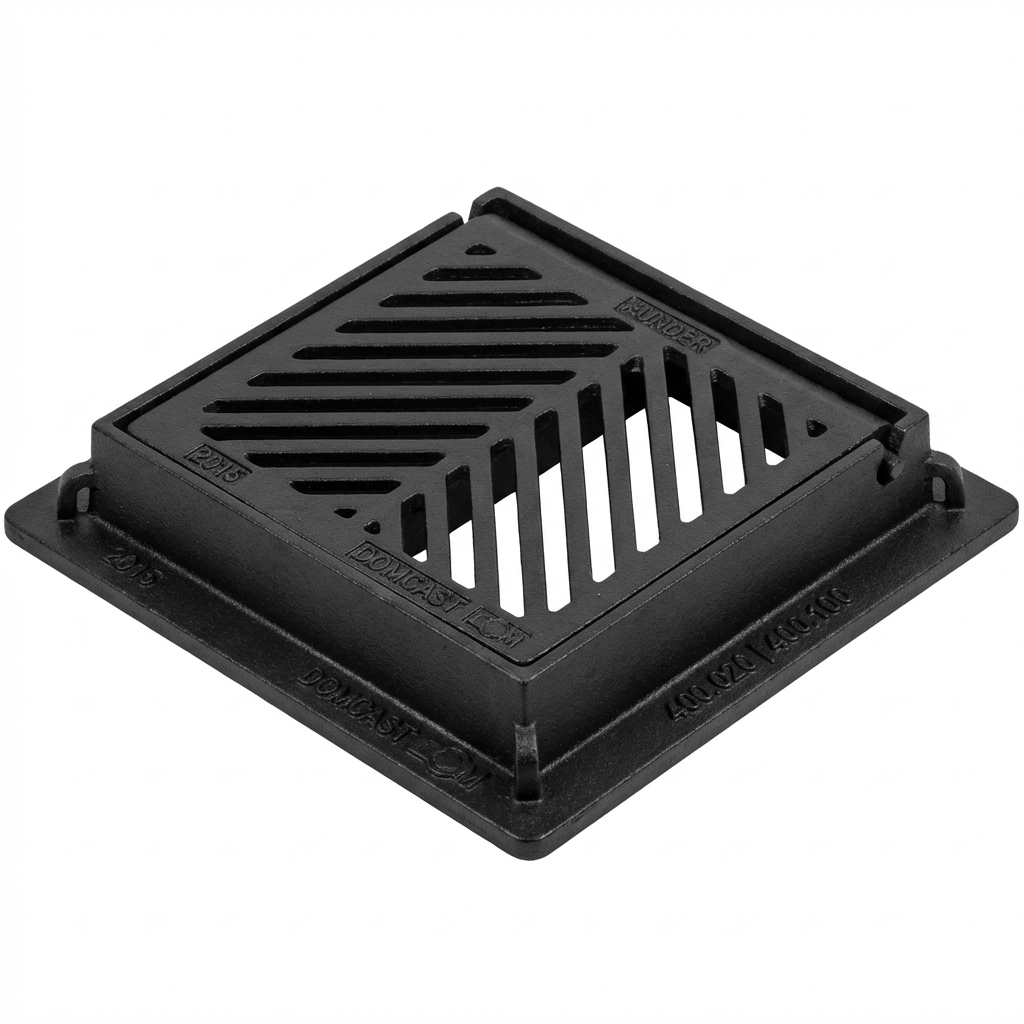
Flat Catchbasin
Low Profile Catchbasin Frame and Cover
V-Type Catchbasin
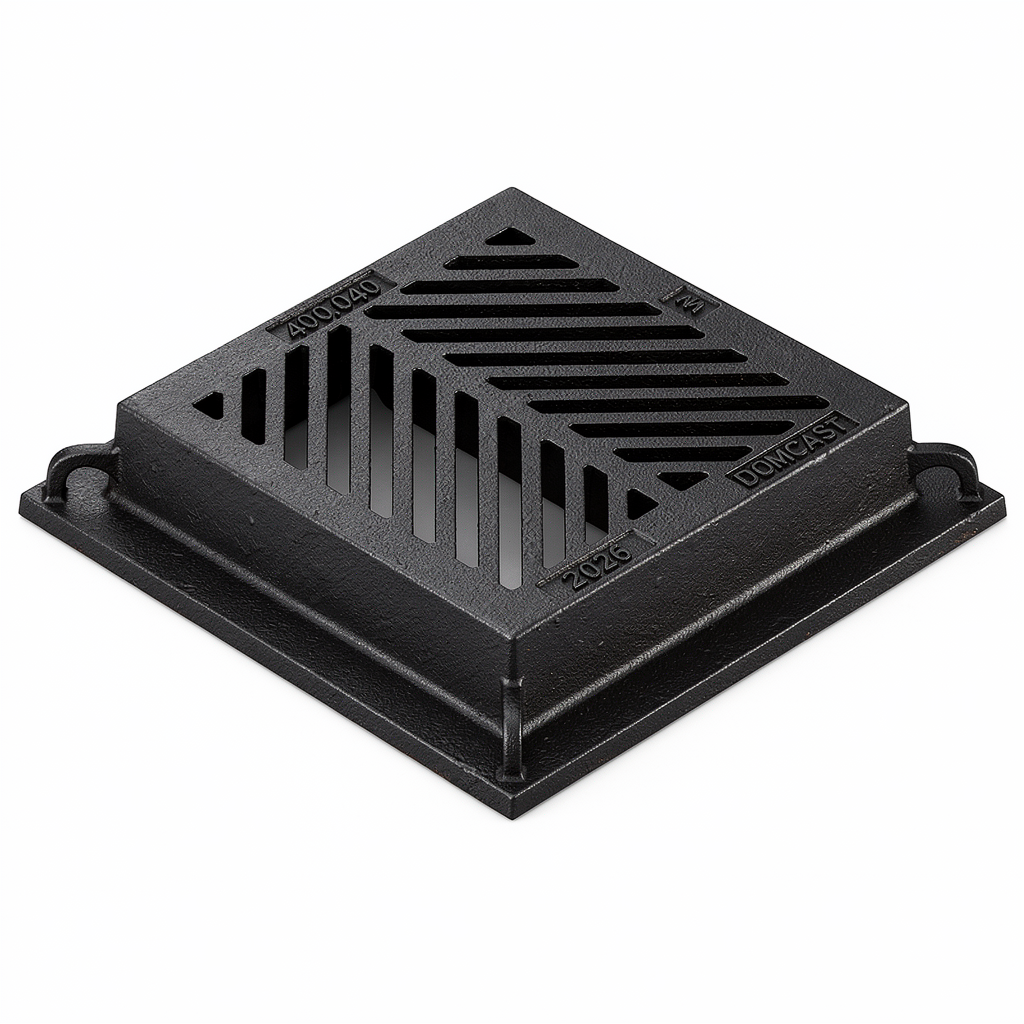
MTO 1 Piece Flat Catchbasin Frame/Cover Integrated
Flat Fish Style Catchbasin
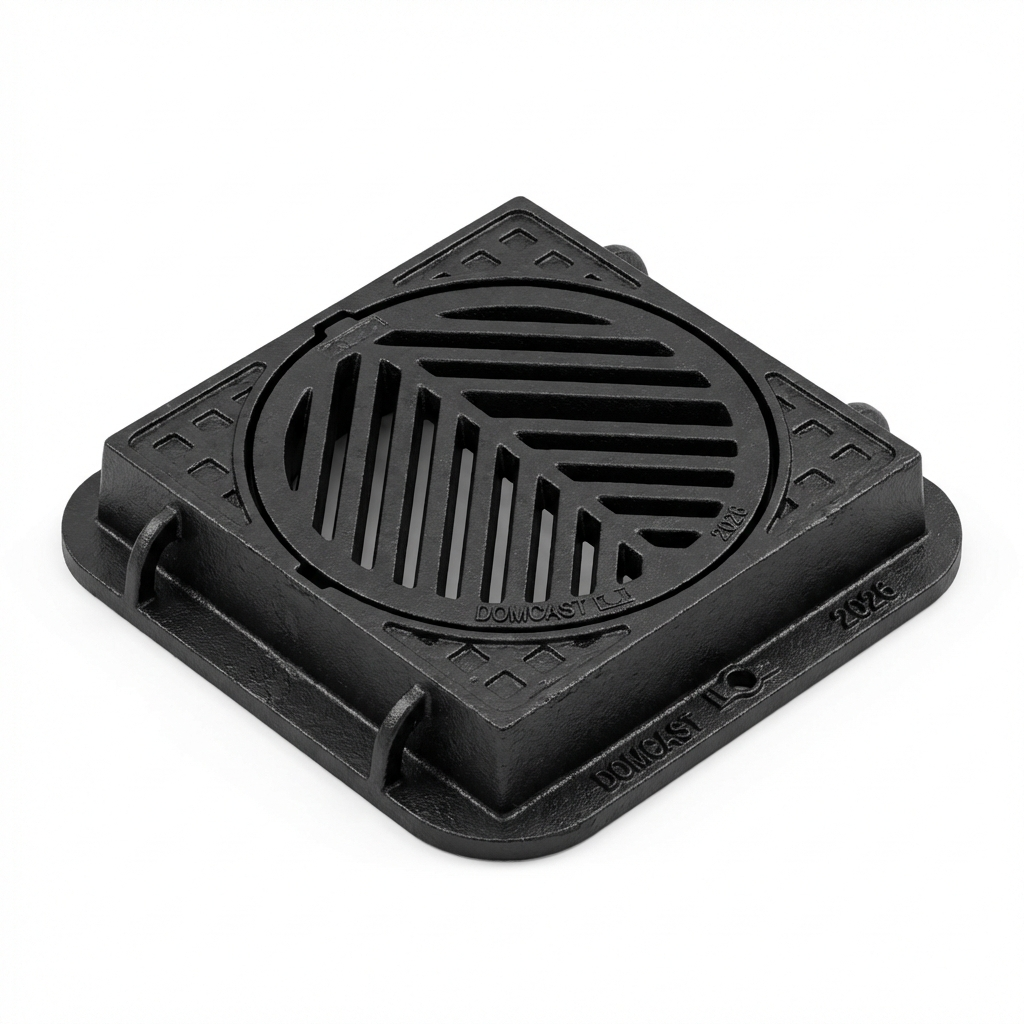
All in One Catchbasin Square Frame Grated Bicycle Proof Cover
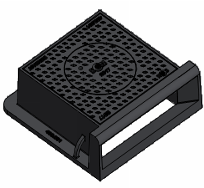
Side Inlet Catchbasin 2 Piece Cover
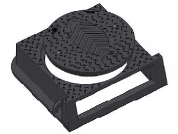
Side Inlet Catchbasin Frame and Cover (Ottawa Part Number 522/523)
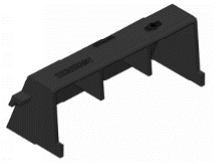
Catchbasin Backarch
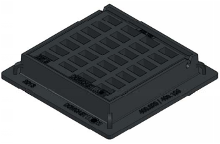
KWC Catchbasin
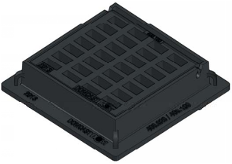
KWC Overflow Catchbasin
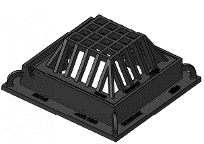
Birdcage Catchbasin
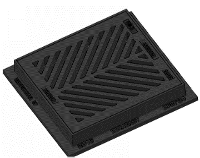
Light Duty Catchbasin Frame and Cover
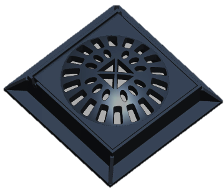
Beehive Catchbasin
OTTAWA 400.070 Catchbasin Square Frame, Ottawa Fish Solid Cover
Catch basin patterns explained
Most Ontario catch basin frames and grates follow the OPSD 400 series, and our part numbers track those drawings. The square frame is common to most patterns; what changes is the grate. Pick it for the flow, the debris, and who travels over it.
Dished overflow catchbasin grates
A dished grate sits below the frame rim so water pools over it and drops through from all sides. OPSD 400.010 is the standard square-frame dished overflow grate with herringbone openings. It keeps taking water when leaves or ice sit on the surface, which makes it the default for treed curb-and-gutter streets. Thunder Bay versions (400.01TB, low profile 400.01TBLP) add cut-off corners on the frame.
Flat storm drain grates
A flat grate (OPSD 400.020) sits flush with the frame, for parking lots, laneways, and anywhere a dished surface would catch a wheel or a plow blade. The MTO one-piece integrated frame and cover (400.040) has no loose grate, so traffic cannot dislodge it. Low profile flat frames (400.020LP) suit shallow structures.
V-type grates
The V-type grate (OPSD 400.030) has two sloping faces that meet at a centre valley. It is used at the low point of a swale or ditch line where water comes in from both sides rather than along a gutter. The V shape shelters the openings from the same leaf mat that blinds a flat grate.
Fish-style catchbasin covers
OPSD 400.050 is the fish-type cover. The openings form a fish outline, a reminder that the catch basin drains to a watercourse. It is common in residential subdivisions. DF519 is the Ottawa version, a 400.070 square frame with a fish solid cover.
Bicycle-proof grates
FHWA's HEC-22 is blunt on this: the parallel bar grate is the most hydraulically efficient pattern tested but is not bicycle safe, because a narrow tire drops between the bars. A bicycle-proof grate breaks up long slots with cross bars or uses a herringbone or diagonal layout so no opening lines up with the direction of travel. Our 400.070 all-in-one square frame with bicycle-proof grated cover is the pattern for bike lanes and multi-use paths.
Beehive and birdcage grates
Beehive (DF504) and birdcage (400.120) grates are domed, for ditch inlets, pond outlets, and yard drains rather than pavement. Debris piles up around the dome instead of over it, so the sides keep passing water after the top is blinded.
Curb inlets and side-inlet frames
A gutter grate can be blinded by floating trash in the first minutes of a storm. HEC-22 recommends curb openings in sags and on grades under 3%, and notes that a curb opening ahead of the grate (the "sweeper" layout) intercepts trash while the grate carries the flow. In Ontario practice that is a side-inlet catch basin: a standard square frame plus a curb-face casting.
- Side inlet catchbasin, 2-piece cover (400.081): the cover splits so one section lifts for cleaning while the curb opening stays in place.
- Side inlet frame and cover, Ottawa 522/523 (400.082): the City of Ottawa pattern, supplied to the Ottawa part numbers.
- Catchbasin backarch (400.090): the arched casting that forms the curb-face opening behind a standard frame, so an existing dished or flat grate can be converted to a combination inlet.
Side-inlet patterns go at sag points, at the bottom of long grades, and on streets with a ponding history. Confirm the curb profile (barrier, mountable, or rolled) when ordering, since the backarch has to match it.
Matching the frame to the structure
The frame has to bear on whatever is under it, and that changes the base you need.
Precast concrete catch basins
The standard case. The square frame bears on the precast top slab or on adjustment rings, on a mortar or sealant bed. All of the OPSD-pattern frames on this page are set up for precast concrete.
Corrugated steel pipe (C.S.P.) basins
A C.S.P. riser has a round opening, so the frame either needs a round base or a concrete collar poured around the riser top to give a square frame something to sit on. The Halifax R 361 grating for the bell end of 750 mm pipe (HWSD-1594) is an example of a casting made to bear directly on the pipe end. Our grates for C.S.P., concrete and HDPE pipe cover the round-base patterns.
HDPE basins
Plastic basins take the same round-base frames as C.S.P., but the frame load has to be carried by a concrete collar or the basin maker's adapter, not the HDPE wall. Tell us the basin make and model and we will match the frame.
Eastern Canada patterns
Halifax and Saint John / Fredericton pattern frames do not follow the OPSD 400 series and are stocked separately: the Halifax R10 / R110 and 5401 patterns (HWSD series) and the Saint John / Fredericton catch basin and manhole frames (5045 series). All are listed in the catalog above.
Open area and hydraulic capacity of a catch basin drain
Open area is the sum of the slot openings in the grate. More open area means more water gets in at a given flow depth. But open area on the drawing is not what the grate delivers in the street.
- Clogging. HEC-22 sag-inlet examples assume 50% of the grate is blocked by debris when sizing. A grate with more open area, or a curb inlet beside it, gives you margin when leaves arrive.
- Splash-over. On steeper grades, gutter flow moves fast enough to skip across the grate. HEC-22 reports splash-over starting on the reticuline grate above 2% and, at 6%, on every grate tested except the curved vane and parallel bar patterns. Longer grates in the direction of flow capture more.
- Depth at the curb. In a sag, the grate acts as a weir at shallow depth and as an orifice once submerged. Open area matters most in the orifice range, which is when ponding is already a problem.
We do not publish hydraulic ratings per grate. Run the inlet calculation from the drawing; we can supply open area and slot layout for any pattern on request.
Installation and maintenance basics for storm drain grates
Bedding and setting the frame
- Set the frame on a full mortar bed or a butyl or elastomeric sealant, not on shims. Point loads crack both the casting and the slab.
- Bring the frame to finished grade with concrete or HDPE adjustment rings. Keep the ring stack within the municipality's limit; tall stacks rock under traffic and loosen the frame.
- Orient dished and V-type grates with the flow. A dished grate set high on the upstream side will not take water.
Load rating
Frames and grates in traffic are specified to AASHTO M306: a 40,000 lb proof load for H-20 traffic, 50,000 lb for H-25, iron to AASHTO M105 / ASTM A48 Class 35B. Light duty frames such as DF220 are for landscaped areas, not roadways. See the AASHTO M306 guide.
Cleaning
Most municipalities clean sumps on a fixed cycle and add a pass before leaf drop and after spring melt. Two-piece covers and lift-out grates speed this up; make sure the drawing shows lifting slots or pick holes.
Need a pattern that is not listed, or a municipal spec we should match? Send the drawing and we will quote to it.
Frequently asked questions
What is a catch basin?
A catch basin is a below-grade chamber that collects stormwater from streets and paved areas. Water enters through a cast iron grate or curb inlet at the surface; sediment settles in the basin while water flows out to the storm sewer.
What is the difference between a catch basin and a manhole?
A manhole provides person access to a sewer for inspection and maintenance and usually has a solid cover. A catch basin exists to take in surface water, so it is topped with a grated cover or curb inlet instead.
What is a curb inlet?
A curb inlet is a catch basin opening built into the curb face, letting water enter from the gutter line even when debris covers the street grate.
When should I specify a dished grate instead of a flat grate?
Use a dished overflow grate on curb-and-gutter streets, especially where trees drop leaves, because water pools over the recessed grate and keeps draining when the surface is partly covered. Use a flat grate where a dished surface would catch a wheel or plow blade, such as parking lots, laneways, and paths.
What makes a catch basin grate bicycle-proof?
A bicycle-proof grate has no long slot that lines up with the direction of travel. Cross bars, herringbone, or diagonal openings keep a narrow tire from dropping in. FHWA's HEC-22 notes that plain parallel bar grates are the most hydraulically efficient pattern but are not bicycle safe.
Do you publish weights, clear openings, and load ratings for each catch basin frame?
Where we have approved figures they appear on the product page and in the specifications table on this page. Anything not shown is confirmed against the current drawing when we quote. Send us the part number or the municipal standard you are matching and we will quote to it.
Can a catch basin frame sit on a corrugated steel or HDPE basin?
Yes, with the right base. C.S.P. and HDPE basins have round tops, so the frame needs a round base, an adapter from the basin maker, or a concrete collar to bear on. Tell us the basin make and model when you ask for a quote.
What load rating do catch basin frames in traffic need?
Frames and grates in roadways are specified to AASHTO M306, which sets a 40,000 lb proof load for H-20 traffic and 50,000 lb for H-25, with the iron to AASHTO M105 / ASTM A48 Class 35B. Light duty frames are for landscaped areas only.