
DomCast Metals supplies cast iron manhole frames and covers for sanitary and storm sewer access — solid covers, perforated covers, sewer lid covers, and airtight inspection covers in the patterns Ontario and Canadian municipalities specify most often.
Every frame and cover pairing is confirmed against your municipal standard at quote time. Canadian-owned and serving the waterworks market for 80+ years.
Browse the catalog
Products
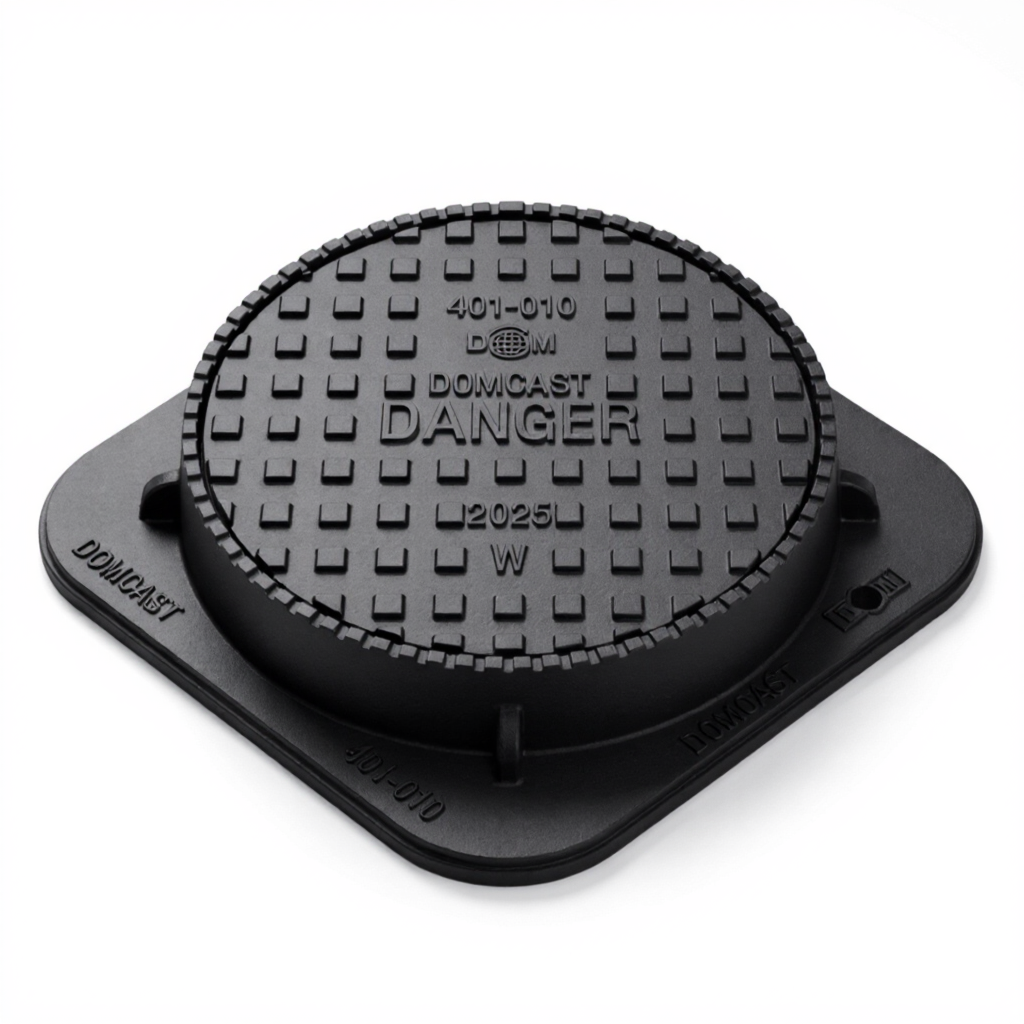
Danger Manhole, Standard Solid Cover
Standard Manhole, Perforated Cover
Standard Manhole, Perforated Cover marked "STORM"
Danger Manhole, Solid Cover marked "ELECTRICAL"
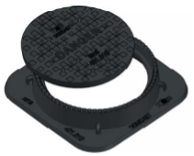
Danger Manhole, Solid Cover marked "STORM"
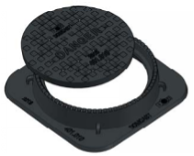
Danger Manhole, Solid Cover marked "SANITARY"
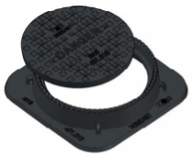
Danger Manhole, Solid Cover marked "WATER"
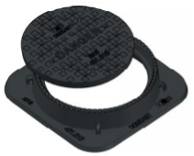
Low Profile Manhole, Frame and Cover
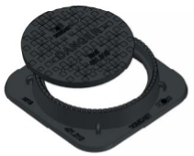
Manhole Frame and Cover marked "THUNDER BAY"
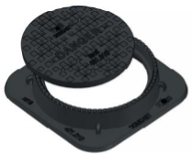
Low Profile Manhole Frame and Cover marked "THUNDER BAY"
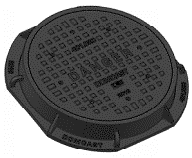
30" (745mm) Manhole Circular Frame, Solid Cover Danger
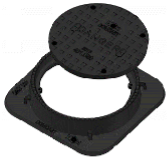
Watertight Manhole
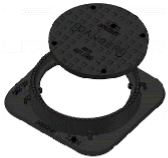
Standard Manhole, Solid Cover/Non-Penetrating Lift Holes
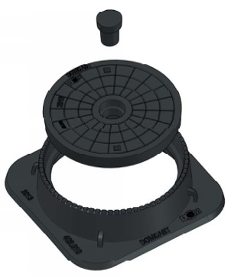
Valve Chamber Frame and Cover with Plug
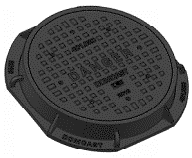
Manhole Circular Frame, Solid Cover Sanitary (524.0), 402.10 Frame
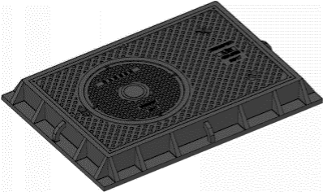
3 pcs Valve Chamber Manhole
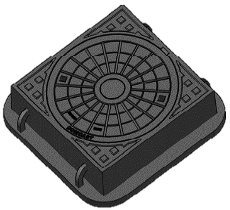
All in One Valve Chamber Manhole
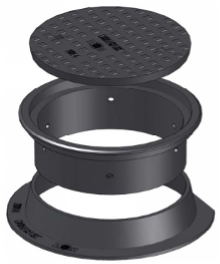
Self Level 3 Piece Manhole AUTOSTABLE
3 pcs Valve Chamber Manhole York/Halton Region
Ottawa Manhole 402.010 Circular Frame, Solid Cover Sanitary
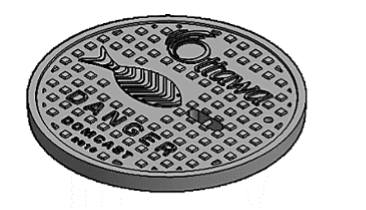
Ottawa Manhole 402.010 Circular Frame, Solid Cover Storm
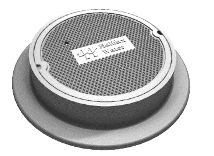
Halifax Manhole Frame and Cover R10/R110
Halifax R 361 Grating Bell End of 750mm Pipe
Halifax 5401 Catchbasin Frame and Cover
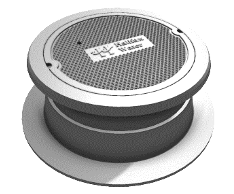
Halifax R10 Cover Adjustable Manhole Frame, Guide and Cover
Saint John/Fredericton Catchbasin Frame and Flat Grate
Saint John/Fredericton Catchbasin Frame and Pyramid Grate
Saint John/Fredericton 635mm (25") Standard Manhole Frame and Cover
Saint John/Fredericton 635mm (25") Manhole Frame, Cover Marked "Fredericton"
Saint John/Fredericton 635mm (25") Manhole Frame, Cover Marked "STORMCEPTOR"
Cover patterns: solid, perforated, marked, and sealed
Most of the manhole lid options in the catalog are the same square frame and round cover with a different top pattern. The pattern is set by the municipal standard and by what is under the cover, so match the drawing number and the cast lettering, not just the diameter.
- Solid (closed) covers. No openings. The default for sanitary sewer access, where you do not want surface water entering the system. The 401.010 Danger Manhole solid cover is the base pattern in our stock.
- Perforated (open or vented) covers. Cast with holes so air can move and surface water can drain. Used on storm sewers and where the standard calls for venting. 401.010B is the perforated version of the standard cover, and 401.010BSTM is the same cover marked STORM.
- SANITARY vs STORM lettering. Ontario municipalities increasingly want the system named on the cover so crews and contractors do not confuse the two. We stock solid covers marked SANITARY (401.010SAN), STORM (401.010STM), WATER (401.010W), and ELECTRICAL (401.010E). Municipality-specific lettering such as THUNDER BAY (401.010TB, 401.010LPTB), Fredericton (5045-207FR), and STORMCEPTOR (5045-207STCP) is also in the catalog.
- Danger-marked covers. The word DANGER is cast into the top of the cover as a warning to anyone lifting it. The 401.010 family and the circular frame pattern (401.020) carry it.
- Non-penetrating lift holes. The 401.03M solid cover has blind lift pockets instead of through-holes, so a solid cover stays solid.
- Watertight and gasketed covers. The 401.030 Watertight Manhole uses a sealed, bolted cover for locations subject to flooding, surcharge, or odour complaints. Airtight inspection covers work the same way with a gasket between cover and frame.
- Lockable and bolt-down covers. Bolted covers also serve where a municipality wants the cover secured against unauthorized removal or displacement by traffic. Confirm the bolt pattern and hardware with your standard at quote time.
- Valve chamber covers. 402.010 (with plug), 402.020 (all in one), 402.030 (3 piece), and DCMY65 (York/Halton Region 3 piece) are the valve chamber patterns. The Ottawa 402.010 circular frame is stocked with SANITARY (DF524.0) and STORM (DF524.1) solid covers.
Grey iron vs ductile iron for manhole castings
Both are cast iron. The difference is the shape of the graphite inside the metal, and that shape decides how the casting behaves under a wheel.
Grey iron (ASTM A48) has graphite in flake form. The flakes act as stress concentrators, which gives grey iron high compressive strength but low tensile ductility. It is still the reference material for municipal castings: AASHTO M306 calls for grey iron to ASTM A48 Class 35B, which is a 35 ksi minimum tensile strength grade. Grey iron machines well, damps vibration, and is what most existing Ontario frames and covers are made of.
Ductile iron (ASTM A536) is treated with magnesium during melting so the graphite forms as spheroids instead of flakes. The round graphite does not notch the matrix the way flakes do, so the casting can bend and absorb impact instead of cracking. The grade numbers say it directly: 65-45-12 is 65 ksi tensile, 45 ksi yield, 12% elongation, and 80-55-06 is 80 ksi tensile, 55 ksi yield, 6% elongation. Grey iron Class 35B has no rated elongation at all.
What that means on the road: a grey iron cover of the right class carries the traffic load fine, and AASHTO M306 proof-loads castings at 40,000 lb on a 9 in by 9 in pad for H-20 traffic (2.5 times the 16,000 lb wheel load) and 50,000 lb for H-25. Ductile iron gets specified where the cover will see repeated heavy impact, where a thinner or lighter cover is wanted for the same rating, or where a municipality has simply written it in. Tell us which material your standard names and we will quote to it. See our AASHTO M306 guide for the rating language.
Frame styles and grade adjustment
A maintenance hole frame does two jobs. It holds the sewer cover at road grade, and it transfers wheel load into the precast structure or adjustment units beneath it. Three frame styles cover almost every replacement.
- Standard-height frame. The 401.010 family. Full frame depth gives the most bearing area and is the normal choice for new construction on a precast riser.
- Low profile frame. 401.010LP and 401.010LPTB. Shorter frame height for shallow structures, resurfacing jobs, or anywhere the top of the precast sits close to finished grade.
- Adjustable and self-levelling frames. The Halifax R10 adjustable frame with guide (HWSD-1462) and the DCM50M Self Level 3 Piece AUTOSTABLE let the frame float with the pavement so it can be raised at resurfacing without breaking out concrete.
Grade adjustment sits between the frame and the structure. OPSS 407 defines adjustment units as the circular and rectangular units used between the drainage structure and the frame to set frame elevation, and it references OPSS 1854 for HDPE and EPS adjustment units. Our LADTECH/DOMCAST speed rings are HDPE adjustment units in 24", 27", 30", and 34" diameters, in flat and sloped versions, plus thin final-grade rings for fine tuning. They do not absorb water or spall like brick and mortar, they stack, and they install fast. A bead of butyl sealant (BUTYL300, BUTYL825) between rings and frame keeps the joint tight. Browse them under HDPE adjustment rings.
Sizing a replacement sewer cover
Most replacement calls are for a cover only, and the cover has to sit in a frame someone else supplied years ago. Before you order, get these off the existing frame:
- Frame drawing number and foundry marks. Look on the underside of the old cover and the inside face of the frame. An OPSD number, a municipal drawing number, or a foundry name narrows the pattern immediately.
- Frame seat diameter. Measure across the machined seat the cover rests on, in two directions at 90 degrees. Old grey iron frames wear and can go out of round.
- Seat depth and cover thickness. The new cover must sit flush with the top of the frame. Measure from the frame lip down to the seat.
- Cover profile. Flat top or crowned, and whether the underside has a locating lip or ribs that engage the frame.
- Lift holes and locking. Number and position of pick holes, and whether the cover is bolted, gasketed, or has a locking bar.
- Lettering and pattern. Solid or perforated, and what the municipality wants cast on top.
Send us photos of the top and underside with a tape in frame, plus the measurements above, and we will match the pattern or tell you that the frame needs to come out too. A cover that rattles in a worn frame will not last, no matter how good the casting is.
Sewer lid, sewer cover, manhole lid, maintenance hole cover: same casting, different name. Ontario's provincial standards (OPSS and OPSD) use "maintenance hole" and show "manhole" in parentheses, so you will see both terms on drawings and in this catalog.
Frequently asked questions
How much does a cast iron manhole cover weigh?
Most municipal cast iron manhole covers weigh roughly 90 to 140 lb, with the frame adding more — exact weight depends on the pattern and class. Confirm the weight for a specific SKU when you request a quote.
What is the difference between a solid and a perforated manhole cover?
Solid covers close the opening completely and are typical for sanitary sewers. Perforated (vented) covers allow airflow or drainage and are used where the municipal standard calls for venting.
What is an airtight inspection cover?
An airtight inspection cover seals the access opening with a gasketed, bolted lid so gases and water cannot pass — commonly specified for inspection chambers and locations where odour or infiltration control matters.
Is a maintenance hole cover the same thing as a manhole cover?
Yes. Ontario's provincial standards (OPSS and OPSD) use the term maintenance hole and show manhole in parentheses. Sewer lid, sewer cover, and manhole lid all refer to the same cast iron cover. Order by the drawing number or SKU, not the name.
Should I specify grey iron or ductile iron for a manhole cover?
Follow your municipal standard. AASHTO M306 references grey iron to ASTM A48 Class 35B, and a correctly classed grey iron cover meets the 40,000 lb H-20 proof load. Ductile iron (ASTM A536) has spheroidal graphite, so it has rated elongation and takes impact better. It gets specified for heavy repeated traffic, lighter covers at the same rating, or when the standard names it. Tell us which one and we quote to it.
What do I need to measure to order a replacement cover for an existing frame?
Any drawing number or foundry mark on the old cover or frame, the seat diameter measured in two directions, the seat depth so the new cover sits flush, the cover profile (flat or crowned, lip or ribs underneath), the lift hole pattern, and whether it is bolted or gasketed. Photos of the top and underside with a tape in frame help us confirm the pattern.
How do HDPE adjustment rings compare to brick and mortar for setting frame height?
OPSS 407 recognizes HDPE and EPS adjustment units (OPSS 1854) alongside precast concrete and rubber units for setting frame elevation. The LADTECH/DOMCAST speed rings are HDPE, stack to the height you need in flat or sloped versions, do not absorb water, and install without mortar cure time. Seal the joints with butyl.
What is the difference between a cover marked SANITARY and one marked STORM?
The casting is the same pattern; the lettering tells crews which system is under the lid. Sanitary covers are usually solid so surface water stays out. Storm covers may be solid or perforated depending on whether the standard wants the structure vented or draining at the surface.